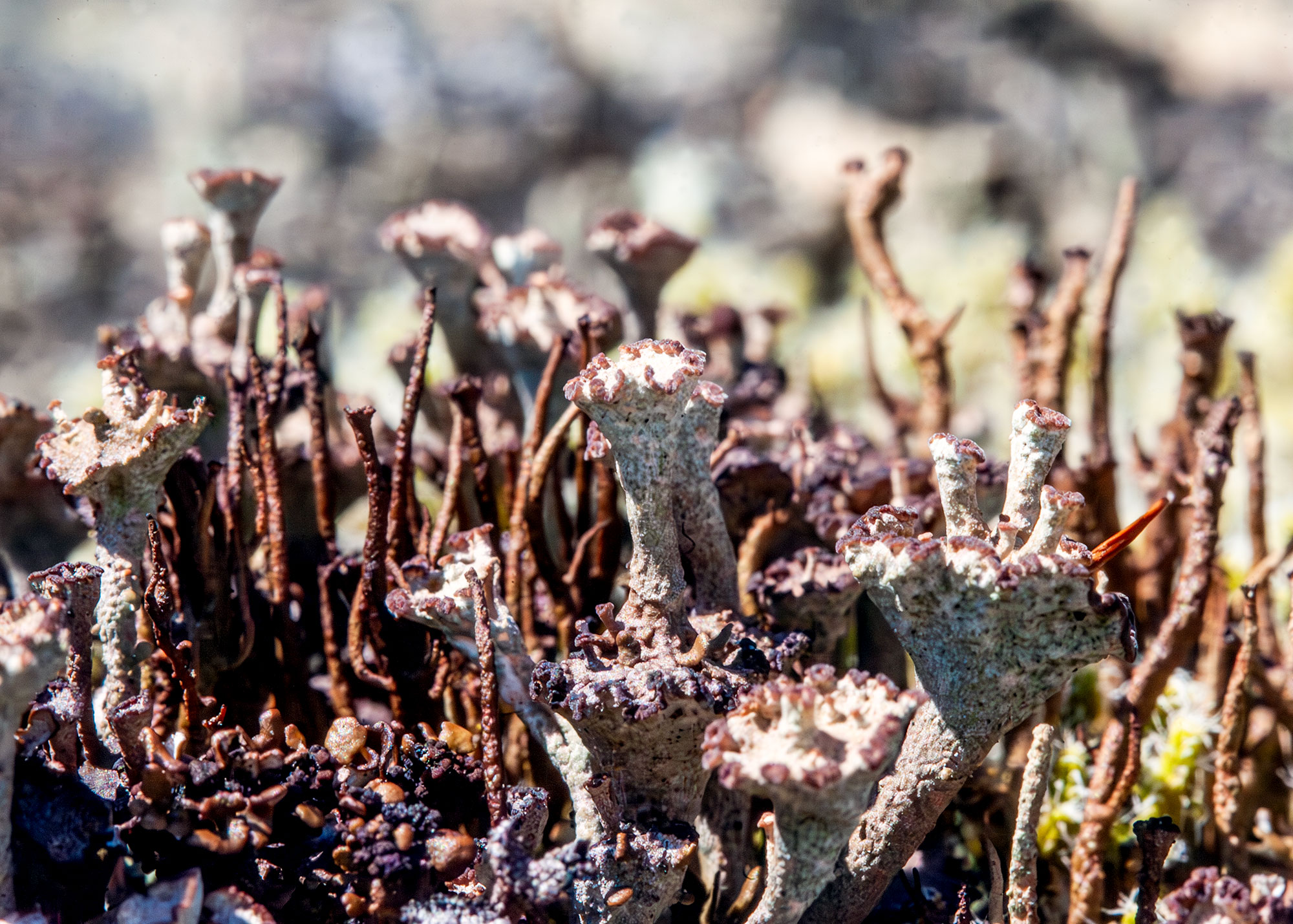
I. The beginning
It is the end of the summer. Many little lives ebb out. The grasses yellow. Butterflies – almost transparent where their tattered wings have lost most of their iridescent scales – fly low, hurriedly, between withering pink clover. Do you ever consider how these millions of seasonal insects die? Some visibly: battering out their last strength against entrapping window panes; stuck to the glue on tape strips spiraling from the ceiling; crushed underneath windscreen wipers. Most unnoticed: eaten, or dropping to earth from a blade of grass when their energy stores run out or the first frost bursts their exoskeletons with its tendrils. And how they live up to that point. Courtship and breeding over and done with, their eggs long since laid, they keep pursuing and sucking the sap until the final few seconds of a life measured in days or weeks, instead of years.
A whinchat swoops down from a bramble perch, snatching a dragonfly made sluggish by the cooling temperatures. One of the insect’s wings falls to the ground.
A wing in the silt. The minutest latticework submerged in dust. How the surface of the world is constructed. Irregular grids, fanning filaments, expanding meshes. Filled in by floods of particles, forming overlapping tiles covering the ground. Subsequently overlaid by new layers of organic debris: structures and aggregates. Compounded and compressed. Scales turn to strata.
And so, time becomes legible on a vertical axis. The past buried underneath – the further down, the more remote in terms of centuries, millennia, aeons… The future rains, or beams, or tumbles, down from above. This wafer-thin, liminal membrane covering the earth represents the present. A vantage point severely limited by not offering a view into – or not allowing a reach up to – the other two expanses.

II. The Paleozoic
Nothing is ever really still.
Things move at different speeds, in different directions, all of the time. The perception of movement is relative to lifespans, focal lengths, scale.
At first, grains of quartz and mica swirled around in alluvial masses washing over the earth at speeds of metres per second. Then, as the flood mixed with the materials on the ground, it thickened to a slower flowing clay. The weather eventually changed and the sun baked the clay to mudrock, creaking and cracking as it shifted its weight. The mudrock was buried under more mudrock, and the deeper layers started settling into a glacial pace. When the pressure from above built up, chlorite formations painstakingly rotated, and sediments, perpendicular to the surface, slid against each other.
330 million years later, the layers of slate crept southeast at a speed of two to three centimetres a year. But still? No, never. The rock heaved with the tides, pulsed with the heat, flowed inexorably. In violent collisions lasting hundreds of thousands of years, the horizontal lines of sediment were turned diagonal, this way and that. Deep below the earth’s surface, the minerals were rioting restlessly.
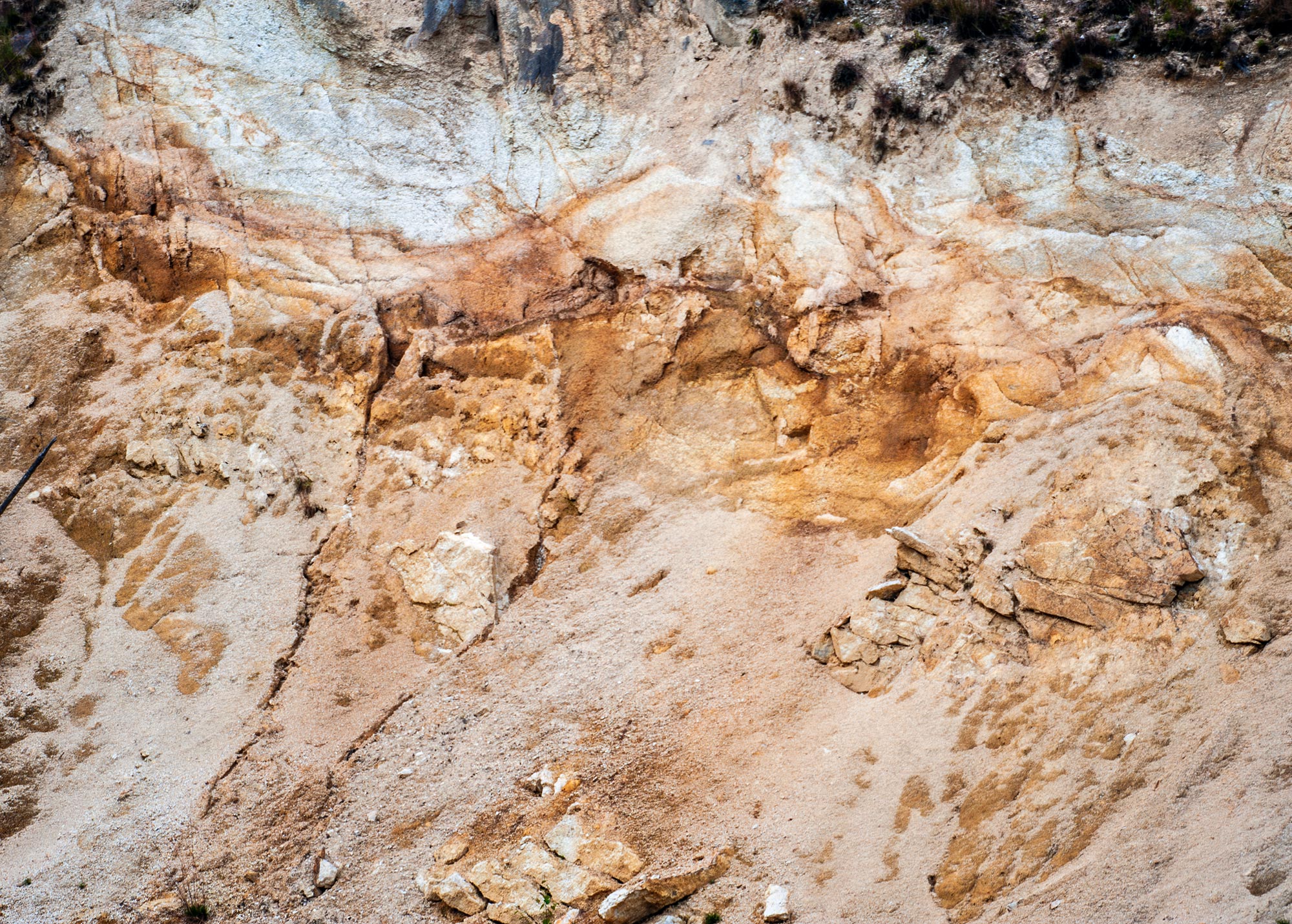
III. 1967
A drill sinks into the bedrock with a high pitched, pulsating hissing. A sludge of stonedust mixed with hydraulic water bubbles up around the steel shaft penetrating deeper and deeper into the side of the crater. One metre, two metres, then the drill is retracted and moved half a foot ahead. The motor purrs, the rotating tip is lowered, the stone gives way as though it was putty. What seemed the most solid of surfaces becomes perforated, divvied up like a sheet of postage stamps.
I apply the explosives. I approach each 2-inch hole, carefully lower a rod of dynamite down to the bottom, and connect the fuses. We clear away the equipment and back off to what is considered a safe distance. The detonation handle is pressed. A fractional delay, and then the whole mountainside thunders and a cloud of smoke rises from the row of holes. An entire sheet of rock falls into the basin below, while pebbles and shards fly into the air and rain down on our helmets. Ancient material blasted into broad daylight.
This is where we break into the earth. Steal its treasure. Break open the vault of the underworld. In my great-great-grandfather’s time, they used wedges or black powder instead of dynamite, but otherwise the process is largely the same: locate the fault lines, score them with circular incisions, then use brute force to pry the rock apart. The quarry has grown as the force has been mechanised: now the crater is a couple of football fields in size, descending in steps to a water-filled hole at the very bottom. We provide roofing material for large parts of the country. The sedimented blue-grey slate splits easily into thin slabs, overlapping to cover our houses instead of the earth’s innards. Strata turned to scales.
On the other side of the river I can see military personnel replacing the old barbed wire border fence with brand new metal meshes; ploughing up the ground behind it and inserting rows of concrete slabs into the earth even further back. Expanding the forbidden zone, widening the scar across the landscape. Much like my wedges pry the slate open, bit by bit. That is where they break apart the land.
I keep thinking about breaking. We break stuff, we destroy, we disturb. The war was just the beginning. But then I think: maybe it is necessary? Maybe everything cannot remain whole? You have to break off to be free. Make a break to move forward. Break up to diversify. You break things open to reveal what is hidden.
What will grow in a no man’s land? What forces will we liberate as we drill deeper down into the planet’s crust?
I think a surface is an illusion of stability. In fact, it is a mesh, a grid – permeated from both sides.
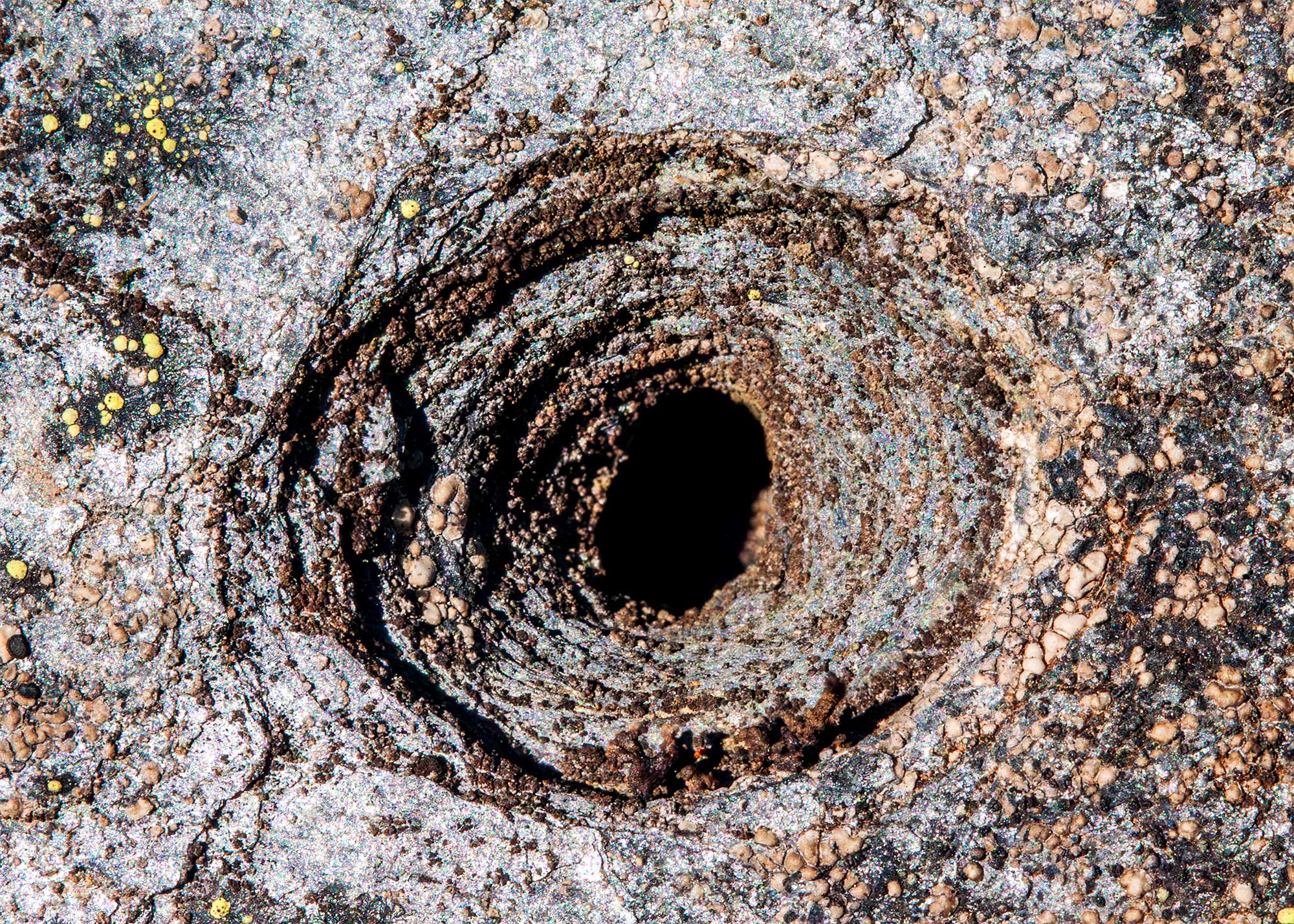
IV. This moment
A flicker. A flight. As you move along the trail of perforated concrete slabs by the edge of the meadow, creatures leap out of your way, take to the air, or slither into the tall grass. You have the sense of being a force of disturbance – but also the sense of being clumsy, out of pace. A dragonfly sees 12 times faster than a human. Its sense of sight has a faster flicker fusion frequency. To it, vastly more happens every second. To it, you move in slow motion.
It strikes you that time may not be quantifiable. What, after all, is the value of a moment? A flicker. A flight. How long is a moment? No matter how thinly you slice it, each segment can be subdivided and thus made more extensive. If you could think faster; would you live longer? The intensity of life surely can’t be contained in two dimensions, in a cross-cut.
By the old slate quarry, lichens and moss have spent years creating new surfaces on the discarded stone sheets. A particularly thick piece of slate catches your eye and you make your way up the slope to pick it up. On your way down again some rocks shift and you stumble, losing your grip on the piece you’re carrying. As it bounces down the small hill it cracks and splits in two. And there, in the freshly revealed stone surface, you discern a tiny pattern. Some fine veins, with even subtler cross-hatching between them, forming an oblong petrified shape raised in thin relief against the soft grey stone. Exposed to the air for the first time in aeons. A dragonfly’s wing.
The moment overflows. Pools in the indents of our history. And merges with the expanses of deep time moving underneath our feet, and over our heads.